
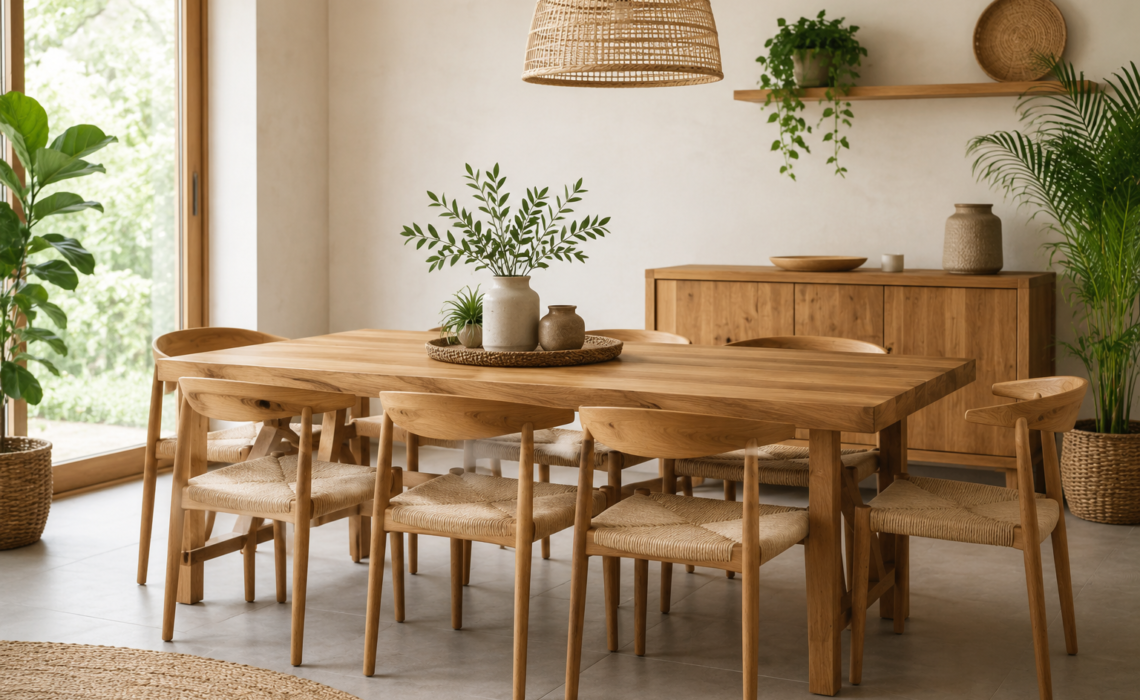
Have you ever wondered what your dining table is really made of? Or consider where it might end up once you’re done with it? Perhaps you’ve caught yourself scrolling through furniture websites, feeling a bit overwhelmed by all the “eco” claims and green marketing buzzwords flying around?
You’re definitely not alone. Sydney homeowners are increasingly making the switch to sustainable dining furniture, and honestly, it’s about time. With our beautiful harbour city facing growing environmental challenges, more of us are looking at our homes and asking: “How can I make better choices?” The good news? Creating an eco-friendly dining space doesn’t mean sacrificing style or breaking the bank.
In this guide, we’ll walk you through everything you need to know about choosing sustainable dining furniture in Sydney. From understanding what makes furniture truly eco-friendly to finding the best non-toxic dining table for your family, we’ve got you covered. You’ll discover popular materials, learn how to spot greenwashing, and explore options for both indoor and outdoor spaces. Let’s get stuck into it!
What Makes Dining Furniture Truly Eco-Friendly?
Understanding Sustainable Materials
When we talk about sustainable furniture, we’re looking at pieces made from materials that don’t deplete natural resources or harm the environment during production. Think responsibly sourced timber, recycled metals, and natural fibres like hemp or organic cotton.
The key is considering the entire lifecycle of a piece. Where do the raw materials come from? How much energy goes into manufacturing? Can it be recycled at the end of its life? Truly eco-friendly furniture ticks multiple boxes across these questions.
Popular sustainable materials include FSC-certified timber, bamboo (which grows incredibly fast), reclaimed wood, and recycled plastics. Each has its own benefits, and the best choice often depends on your specific needs and aesthetic preferences.
The Difference Between Eco-Friendly and Greenwashed Products
Here’s where things get a bit tricky. Greenwashing is when companies make their products appear more environmentally friendly than they actually are. You’ll see vague terms like “natural” or “green” plastered everywhere without any real substance behind them.
Genuine eco-friendly products come with certifications and transparent information about their materials and manufacturing processes. Look for labels like FSC certification for timber, GOTS for organic textiles, or Greenguard for low chemical emissions.
If a company can’t tell you exactly where its materials come from or how its furniture is made, that’s a red flag worth paying attention to.
What Should I Look for When Buying a Non-Toxic Dining Table?
A non-toxic dining table should be free from harmful chemicals like formaldehyde, VOCs (volatile organic compounds), and toxic finishes. These nasties can off-gas into your home for years, affecting indoor air quality.
Check what finishes and adhesives are used. Natural oils, beeswax, and water-based finishes are much safer alternatives to synthetic lacquers. Solid timber is generally safer than particleboard or MDF, which often contains formaldehyde-based glues.
Don’t be shy about asking retailers direct questions. A reputable sustainable furniture seller will happily provide detailed information about their products’ composition and safety certifications.
Eco-Friendly Dining Table Sets: Your Complete Guide
Popular Sustainable Dining Table Materials in Australia
Australian craftspeople work with some stunning sustainable materials. Locally sourced hardwoods like spotted gum and blackbutt are both durable and gorgeous, plus they don’t rack up carbon miles travelling from overseas.
Bamboo has become incredibly popular for eco-friendly tables due to its rapid growth rate and strength. It’s harder than many hardwoods, whilst being significantly more renewable. Recycled timber and metal combinations also create striking modern pieces.
For those wanting something truly unique, look into furniture made from salvaged materials. Old bridge timbers, demolished building wood, and reclaimed railway sleepers all make beautiful, characterful dining tables.
Reclaimed and Recycled Timber Options
There’s something special about a dining table with history. Reclaimed timber carries the marks and patina of its previous life, making each piece genuinely one-of-a-kind. Plus, using existing wood means no new trees need to be cut down.
Sydney has several workshops specialising in reclaimed timber furniture. They source materials from old buildings, wharves, and even wine barrels. The result? Stunning pieces that tell a story whilst being kinder to the planet.
Recycled timber also tends to be more stable than new wood, having already gone through cycles of expansion and contraction. This means less warping and cracking over time.
Is a Sustainable Dining Table More Expensive Than Regular Furniture?
Let’s be honest – yes, sustainable dining tables often cost more upfront. Quality materials, ethical manufacturing, and smaller production runs all contribute to higher price tags.
However, here’s the thing: sustainable furniture typically lasts much longer than cheap alternatives. A well-made timber table can serve your family for generations, whilst a budget flat-pack might need replacing every few years. When you calculate cost-per-year, sustainable options often work out cheaper.
Many Sydney retailers now offer payment plans for eco furniture, making it more accessible. Think of it as an investment in both your home and the environment.
Beyond the Dining Room: Building a Sustainable Home
Eco-Friendly Homeware and Sustainable Homewares Essentials
Once you’ve sorted your dining furniture, why stop there? Sustainable homeware options now cover everything from kitchenware to bedroom accessories. Think bamboo kitchen utensils, organic cotton napkins, and recycled glass tableware.
Building a sustainable home happens gradually. Start with items you use daily and replace with eco-friendly alternatives as things wear out. There’s no need to throw away perfectly good items in pursuit of sustainability – that defeats the purpose!
Local Sydney markets and online Australian retailers offer gorgeous sustainable homeware collections. Supporting these businesses keeps money in our economy whilst reducing transport emissions.
Non-Toxic Sofa Options in Australia
Your living room deserves the same attention as your dining space. A non-toxic sofa Australia shoppers can trust uses natural latex or organic wool padding instead of chemical-laden foam. Frames should be solid timber, and fabrics organic or recycled.
Several Australian manufacturers specialise in healthy, sustainable sofas. Yes, they cost more than your average furniture store option, but consider this: you probably spend more time on your sofa than on any other piece of furniture. Investing in a non-toxic option makes sense.
Look for GOTS-certified fabrics and Oeko-Tex-certified materials as indicators of genuinely safe products.
Choosing a Sustainable Bed for Your Bedroom
We spend roughly a third of our lives in bed, making sustainable bed choices particularly important. A sustainable bed features a solid timber frame from certified sources and a natural mattress free from synthetic foams and chemical flame retardants.
Natural latex mattresses, organic wool, and cotton batting provide comfortable, healthy sleep surfaces. They’re also more breathable than synthetic alternatives, helping regulate temperature throughout the night.
Australian-made beds reduce transport emissions and often use locally sourced materials. Several Byron Bay and Melbourne manufacturers have built excellent reputations in this space.
Making the Switch: Practical Tips for Your Eco-Friendly Dining Space
Transitioning to sustainable furniture doesn’t need to happen overnight. Start by assessing what you currently own. Can anything be repaired, refinished, or reupholstered rather than replaced? The most sustainable furniture is often what you already have.
When purchasing new pieces, buy the best quality you can afford. One well-made sustainable dining table is better than several cheap replacements over the same period. Consider second-hand and vintage options too – giving existing furniture a new home is inherently sustainable.
Mix and match if needed. Perhaps you invest in a beautiful eco-friendly dining table now and upgrade chairs next year. Building a sustainable home is a journey, not a destination.
Conclusion: Investing in Sustainable Furniture That Lasts
Choosing eco-friendly dining furniture for your Sydney home is one of those decisions that benefits everyone. You get beautiful, healthy furniture that’ll last for years. Local craftspeople and ethical manufacturers receive support for doing things the right way. And our planet gets a bit of breathing room.
Throughout this guide, we’ve explored what makes furniture genuinely sustainable, from material choices and certifications to durability and non-toxic finishes. We’ve looked at options for dining tables, chairs, outdoor spaces, and beyond. The good news? There’s never been more choice for Sydney homeowners wanting to make better decisions.
So, where will you start? Perhaps a stunning reclaimed timber dining table, or maybe some comfortable eco dining chairs? Whatever you choose, know that every sustainable purchase makes a difference. Your dining room is where family and friends gather, where memories are made, and where countless meals will be shared. Make it a space that reflects your values – one beautiful, sustainable piece at a time.