
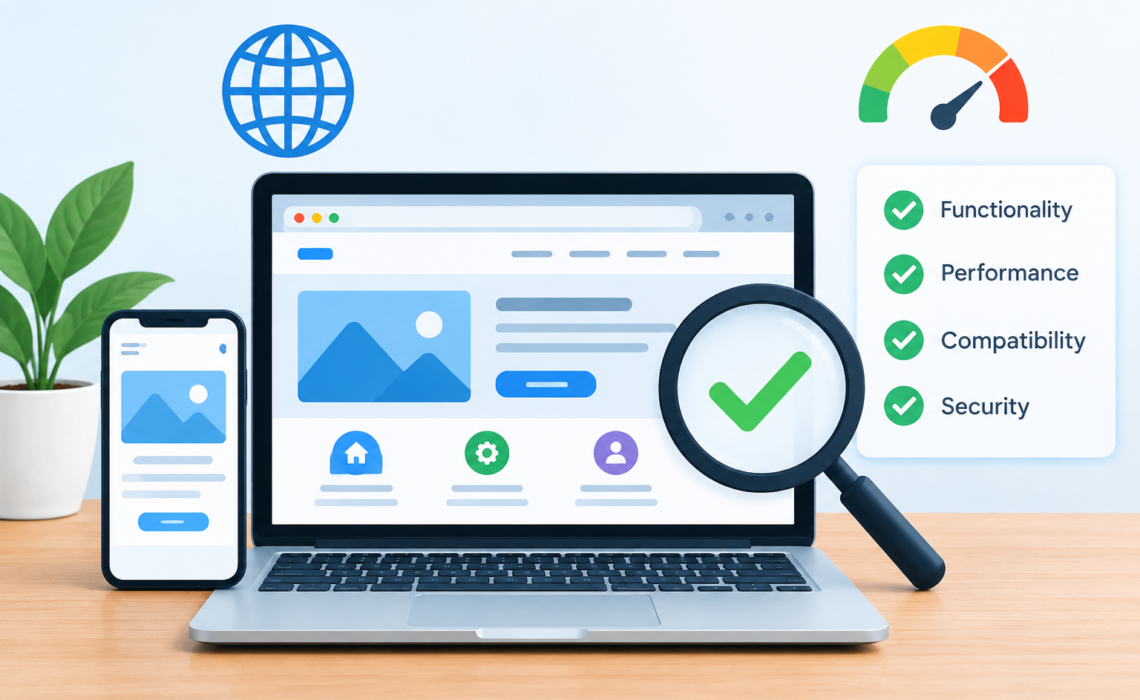
A business website is never truly finished. Customer expectations change, new competitors enter the market, and marketing campaigns continually bring different types of visitors to important pages. A website that performs well today may therefore need adjustments in the future.
Regular testing gives businesses an opportunity to understand what actually works instead of relying entirely on assumptions. By examining visitor behaviour and comparing different approaches, companies can gradually improve the experience they provide and make their websites more effective.
Understand What Visitors Are Doing
Before changing a website, it helps to understand how visitors currently use it. Analytics can reveal which pages attract the most attention, how people move through the site, and where they commonly leave.
For example, a business may discover that a service page receives plenty of visitors but generates relatively few enquiries. An online store might notice that customers frequently add products to their baskets but leave before completing checkout.
These patterns do not always explain exactly why visitors leave, but they provide useful starting points for further investigation.
Test One Change at a Time
Making several major changes simultaneously can make it difficult to determine which adjustment influenced the results. Testing individual elements provides clearer information.
Businesses might experiment with a headline, call-to-action button, form, page layout, or product description. Comparing different versions can help determine which approach makes it easier for visitors to take the desired action.
Companies exploring conversion optimisation can also use resources such as stellar-eclair-ea9391.netlify.app when researching approaches to improving website performance and understanding the role of CRO in digital growth.
Focus on Meaningful Results
Not every improvement should be judged by the number of page views a website receives. Businesses should identify the actions that actually contribute to their objectives.
For an e-commerce business, this might include completed purchases or additions to a shopping basket. A service company may focus on enquiries, bookings, or consultation requests.
Choosing meaningful measurements makes it easier to determine whether a website change has produced a useful result rather than simply altering how the page looks.
Learn From Unsuccessful Tests
Not every test will improve performance, and that does not necessarily mean the effort was wasted. An unsuccessful change can still provide valuable information about customer preferences.
If a new page layout performs worse than the original, the business has learned something about how visitors interact with that page. The original version can be restored, and another idea can be tested.
Over time, this process creates a stronger understanding of customer behaviour and reduces the need to make decisions based on guesswork.
Conclusion
Website testing allows businesses to make improvements based on evidence rather than assumptions. By analysing visitor behaviour, testing individual changes, and measuring meaningful outcomes, companies can gradually create a more effective digital experience.
The process does not require every experiment to succeed. Continuous learning is what makes testing valuable, helping businesses adapt their websites as customer behaviour, technology, and market conditions continue to change.