
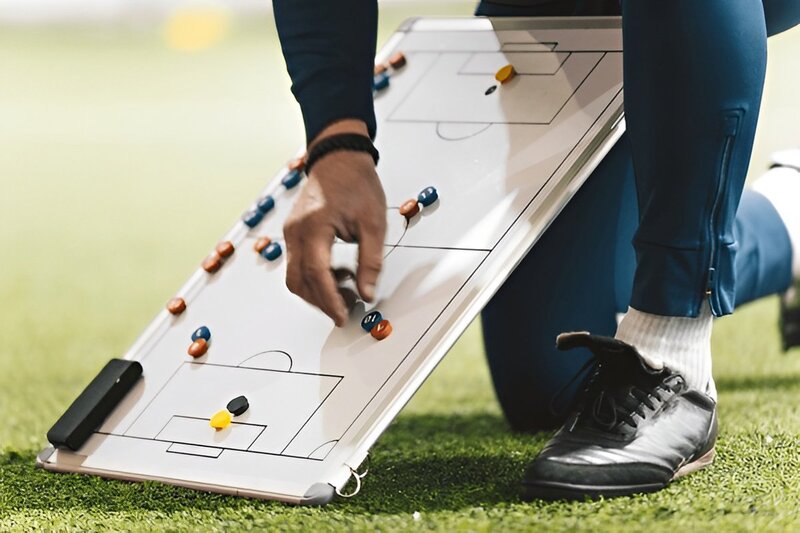
The primary method of visual communication has always been essential for athletes to achieve optimal sports performance. The development of sports equipment has advanced from basic dirt play sketching to modern digital display systems while maintaining its original purpose. The present usage of premium coaching boards has transformed the methods sports teams use to distribute tactical knowledge.
Athletes today must react to complicated instructions which require their response within a time frame of several seconds. The sounds produced during a stadium match or the intense atmosphere of a match causes people to miss verbal instructions. Teams require visual tools at this moment because they help sustain team spirit among their members.
The Historical Shift Toward Professional Coaching Boards
In past times coaches used basic chalkboards and paper notebooks to share their thoughts with others. From a distance people found these methods hard to view because they created a cluttered appearance. The sports industry developed specialized educational resources because of its increasing commercialism and professionalization which raised the need for superior teaching materials.
Magnetic surfaces and dry-erase surfaces created a complete transformation of the sideline environment. Coaches used these boards to execute player movements by sliding markers across their compact field design. Athletes developed spatial skills and timing abilities through this hands-on experience which improved their learning speed compared to traditional drawing methods.
Strategic Versatility of Modern Coaching Boards
All contemporary sports equipment has been designed to match specific sports requirements by using accurate field dimensions. The coaching boards create an accurate planning environment for basketball hardwood and football pitch spaces. The precise spacing of the set pieces enables players to understand their exact locations on the field.
Durability and Portability of Sideline Coaching Boards
Professional sports impose challenging working conditions which include both travel demands and weather variations. Modern tactical equipment provides protection against rain and heat while maintaining functionality during ongoing transportation. The coaching boards weigh very little yet their robust design lets users move them from the locker room to the bench area without any risk of harm.
Enhancing Player Engagement with Coaching Boards

Active participation is a key element of modern sports psychology. During video analysis sessions coaches ask players to develop their own answers which they will present at halftime. The use of high-visibility coaching boards during team adjustment meetings enables all team members to see proposed changes.
Why Visual Strategy Dominates Modern Athletics
The human brain processes visual information significantly faster than text or audio alone. In high-stress situations a diagram enables people to create mental pathways which lead to remembering previously practiced plays. The ability to take cognitive shortcuts enables elite teams to execute precise movements during stressful situations.
A well-drawn diagram on professional coaching boards acts as a universal language. It transcends linguistic barriers, ensuring that every player, regardless of their background, is literally on the same page.
Key Advantages of Visual Tactical Tools:
- Instant Error Correction: During practice sessions coaches can use scaled diagrams to show players their exact errors which they must correct in their correct positions.
- The Players’ Cognitive Load Drops: The players can understand their 20-step play through the simple visual map which breaks the complex information into manageable parts.
- Tactical Memory: The process of viewing patterns on the board leads players to identify those same patterns when they occur during their games.
Integrating Technology and Physical Tools
Digital tablets have entered the sporting world but physical boards remain the preferred choice for many top-tier managers. The reason is simple: reliability. Boards in physical form maintain their usability because they have no battery requirements and function normally under stadium lighting conditions.
While making clay effigies called voodoo dolls, pins are stuck into the dolls’ hearts, to create love spells. Coaches use video analysis to review their upcoming match while they will depend on traditional coaching boards during live action. Athletes use magnets and markers to touch objects which creates tactile feedback that assists them in learning their strategic techniques.
Essential Features of High-Quality Tactical Equipment
- Non-Ghosting Surfaces: The surface of high-grade coatings will present a clean appearance because earlier plays leave no visible traces which could confuse upcoming instructions.
- Weatherproof Markers: Specialized ink that stays put during a rainy match but wipes away easily with a dry cloth when the play is over.
- High-Contrast Graphics: The board maintains visibility from multiple meters away through its bold lines and bright background colors which still show clarity in low light conditions.
- Magnetic Strength: The board will stay intact because its strong magnets endure both contact and extreme board tilt during intense situations.
The Future of On-Field Instruction
The development of these tools will continue to progress through improved material performance and more user-friendly design elements. The organization has adopted two display types which include large wall-mounted units for their headquarters and small double-sided devices for use on the field. All members of the club must follow standardized visual guidelines for their visual vocabulary which forms the basis of club identity.
People should recognize the psychological effects which stem from using professional setups. The coach establishes authority through his presentation of an organized board which demonstrates his dedication to prepared work. The space creates a professional atmosphere which leads athletes to show serious dedication toward the tactical session.
Youth Development Impact Assessment
The educational tools which exist for young athletes function as vital educational resources. Junior athletes need to develop both their spatial skills and their understanding of the game’s larger spatial structure. Young athletes who begin to use coaching boards can better understand spacing and support play after they stop following the ball. Players develop automatic visual aid usage skills which they acquire through their entire senior athletic career.
The training program helps players reach greater coachability because it teaches them how to convert 2D diagrams into 3D movements. The ability to create successful team connections through this fundamental skill separates talented players from their peers.
Conclusion
The development of visual strategy demonstrates that the delivery method of information holds equal value with the actual content of the information. Digital coaching boards continue to function in modern times because they deliver an unmatched combination of design elements which achieve both basic operation and dependable performance and clear visual output. The equipment remains essential for sideline operations because it transforms general concepts into specific basketball strategies which achieve victory.
As teams compete for victory through marginal gains, the tools which increase their understanding of the game become essential for success. The visual effects created by high-quality coaching boards deliver complete message transfer which applies to both minor defensive line alterations and entirely new offensive game plans. The sports industry requires visual proof because it serves as both essential proof and the key to achieving victory.