
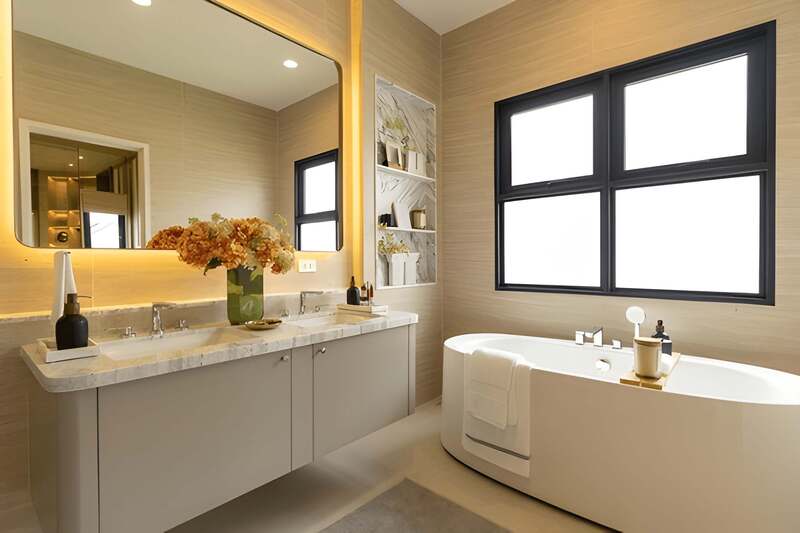
A sanctuary in the home is perhaps the foremost consideration in contemporary interior design. In the heart of Victoria, homeowners are looking for ways to combine luxury and function, hence a bathroom is desired that feels both curated and timeless. The balance often hinges upon the harmonious pairing of two major fittings-the vanity basin and the freestanding bathtub, often cited by various Melbourne designers as the focal point of the room.
It is the synchronizing of these elements that transforms the bathroom from a purely functional arena to a cohesive sanctuary. A basin and tub of mismatched styles will create a visual dissonance, hence cluttering the vision or simply making it feel poorly designed. This guide takes into consideration laws of symmetry in design with material selection and stylistic consistency for a unified bathroom experience.
The Principles of Design Symmetry with freestanding bathtubs Melbourne
Design symmetry is not to say that everything is beholden to identicalness; rather, it is where some common visual language connects the several elements that you use. In choosing freestanding bathtubs, Melbourne people often name the ‘hero’ piece first and then choose a basin that resonates with its shape.
Understanding Geometric Harmony
Your bathtub silhouette will provide that all-important first character into your room. An ill-feeling contrast will be presented if the tub shape has soft, organic curves and the basin shape is in sharp industrial angles.
- Curved Profiles: If your tub is rounded or has an oval “egg” shape, then look for countertop basins that match it all along in language, having thin edges and circular footprints.
- Angular Profiles: For rectangular or square tubs, the vessel basin with clearly defined corners and flat surfaces provides for a structured architectural look.
- Hybrid Styles: The modern style may allow for a few parameters to be changed and has what can be referred to as a “soft-square”. This is a rectangular shape with the corners rounded. It then finds an equilibrium and thus permits the maximum flexibility with regards to the selection of tapware.
Selecting Materials for freestanding bathtubs Melbourne
The material has much to do with how you will experience the tactile qualities of the bathroom. Consistency (or, at the least, an considered contrast between materials) is a very professional way to finish off any fixture.
1. The Classic Appeal of Acrylic
Most freestanding bathtubs Melbourne wholesalers sell are made of the finest sanitary-grade acrylic. It is light, retains heat well, and has a high-gloss finish. Unless you choose to operate with a stone basin, then acrylic or ceramic seems to be the way to go. Ceramic basins are neat for an acrylic tub because they share reflective qualities and are incredibly easy to clean to keep the tub aids in “white” matching with the basin in “white.”
2. The Luxury of Stone Composite
Stone resin or polymarble fixtures are bathroom luxuries incarnate. These materials bear a matte or satin finish that feels much like natural stone. If you go for stone-composite freestanding bathtubs Melbourne yuppies approve of, definitely complement it with a basin made from the same material. This prevents one from looking “cheaper” than the other by ensuring both surfaces reflect the light in the same way.
Color Coordination and Finishes
With white remaining the favorite among bathroom porcelain, the speedy steps towards color and texture seem to dominate. The art of coordinating these tones takes some training.
3. Matching Matte and Gloss Surfaces
Mixing a high-gloss product with matte is perhaps the worst mistake to do. The matte finish might look “dirty,” the glossy finish might appear too “plastic.” Stick with the finish type on both major fixtures for that high-end feel.
4. Exploring the “Nood” and Concrete Trend
Concrete and terracotta tones are creeping into modern abodes in place of white in Melbourne. When working with these earthier palettes, ensure that the pigment batch matches. Even a slight variation in gray can be very jarring when the basin and tub are in the same line of sight.
Technical Considerations for a Cohesive Layout
Cohesion in look is not just about how you see the things in a catalog; it looks into how they interact within the physical constraints of your bathroom. Placement of freestanding bathtubs Melbourne homeowners choose must allow for the ‘breathing room’ to sustain a sense of luxury.
Spatial Planning and Proportions
- Scale: A huge deep-soaking tub with a tiny shallow basin would look out of place. Try to maintain balance on the visual “weights” of the items.
- Tapware Consistency: Having identical tapware is most effective in tying a basin and tub together. If you are going with a floor-standing mixer for the bath, then the mixer for the basin should be from the same design range and have the same finish (e.g., brushed nickel or gunmetal).
- Clearance: Ensure a good 100mm to 200mm clearance between a freestanding tub and a wall or a vanity for easy cleaning and to accentuate the “freestanding” aspect of the piece.
Styling Your freestanding bathtubs Melbourne for Maximum Impact
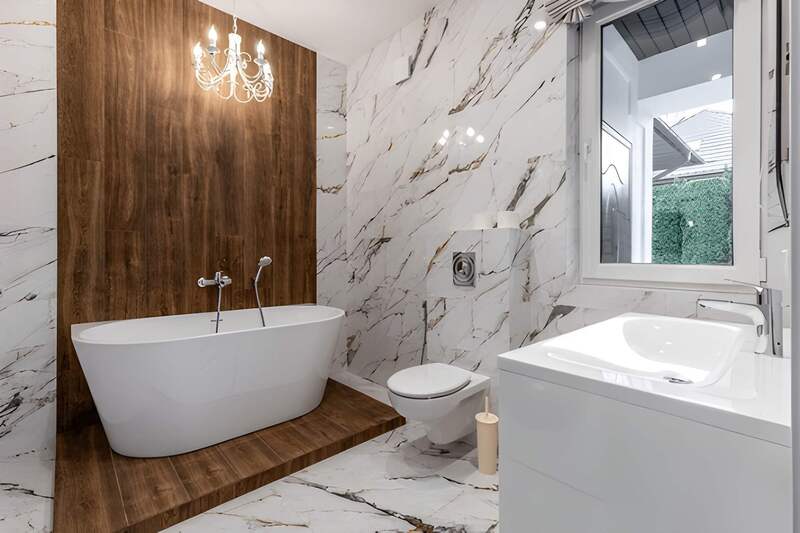
Once the major fixtures are installed, the “soft” styling elements act as the final glue binding the design essence.
Essential Accessories for a Unified Look
Reinforce the correlation between the basin and bath by emphasizing these repetitive elements:
- Timber Accents: Timber bath caddy with matching wood grain to the vanity unit.
- Textural Repetition: Find freestanding bathtubs Melbourne ranges with a fluted exterior skin if any fluted detailing is there on your basin.
- Color Accents: Match towels, soap dispensers, and possibly robe hooks to the primary metallic finish of your tapware.
The Role of Lighting
Lighting can greatly influence the overall appearance of your fixtures. Gentle, warm lighting can render stone surfaces warm and velvety-like, while cool and bright light creates stark contrasts with clean lines for surfaces such as high-gloss acrylic. Perhaps put some dimmable LED strips around the base of the tub and behind the vanity mirror, allowing for a truly synchronized glow.
Maintenance for Long-Term Visual Cohesion
A bathroom only appears cohesive when kept in proper condition; as time goes by, different materials age at different rates.
- What to Avoid: Non-acidic cleaners; these would facilitate the development of etches on stone surfaces.
- Protecting Acrylic: Avoid anything abrasive that could scratch the surface of your freestanding bathtubs Melbourne. Scratching loses the elegance of the finish and would not be able to be matched with a sparkly basin next to it.
- Polishing Metals: Keep tapware free from water spots. Watermarks on a black tap at the basin and a clean tap at the bath will break the visual connection between the two.
Conclusion
Bathroom design is all about intentionality. By choosing freestanding bathtubs Melbourne that share a common geometry, material, and finish with your vanity basin, you are articulating a space that feels balanced and restorative. Whether you prefer the sharp lines of modern minimalism or the soft curves of a traditional sanctuary, the “Paragraph-Bullet” approach to your planning, whereby you articulate the room narrative first and go on to the technical details next, will yield something that is greater than the summation of its parts.
A cohesive bathroom is not just a value addition you confer on your property; it is an investment toward your daily wellbeing. Once the room speaks a mutual design language to the eye, the aura surrounding the user shouts relaxation, energy renewal.