

Have you ever wondered why so many Australians are abandoning traditional timber construction for something far stronger? What if your house could withstand a direct assault from termites, bushfires, and cyclones without breaking a sweat? And wouldn’t it be great knowing that your greatest investment has been designed to last for generations?
Steel frame kit homes have taken Australia by storm, and, for very good reason. These modern constructions marry utter strength with design flexibility, making them just right for our unusual climate and tough conditions. From the sultry outback to cyclone-prone coastal areas, steel structures have proven their worth again and again across Australia.
The Lowdown on Steel Frame Kit Homes.
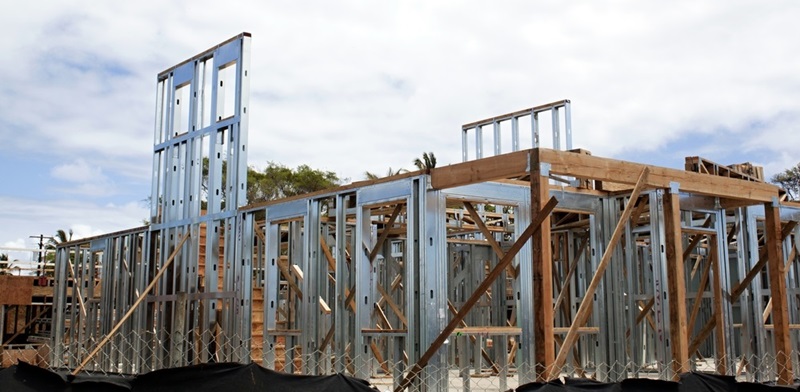
What are Steel Structure Homes, and how do they work?
Contrarily, the skeleton of your home is built of light-gauge steel frames instead of traditional timber. Imagine replacing wooden bones with those of steel; these will not warp, rot, or get eaten by termites.
Pre-engineered steel frames arrive on the site of the building for assembly. The steel components are manufactured off-site via a cutting and/or welding technique, ensuring that each piece is the right fit for the other. Thus, using this design-and-build strategy for steel frame homes allows a faster construction period and fewer headaches on-site.
The beauty of a steel structure home is that it gives unerring consistency. Unlike timber, which can vary in quality and moisture content, steel provides dependable performance, all of the time. Every component is manufactured to very specific tolerances, which helps eliminate the estimation or guesswork that so often plagues traditional construction.
The main differences between steel framed houses and conventional timber construction
Timber has served Australian builders well for centuries, but it has its weaknesses. Climatic changes expand and shrink wood, it invites pests, and it is prone to rot under moisture. Steel constructions are free from such considerations.
Steel frames are completely straight and true, resulting in the perfect levelling of walls, floors, and ceilings. No more creaking floorboards or doors suddenly refusing to close! Steel, meaning no added worries for bushfire-country situations, will not burn.
Steel Frame House Construction: Building Process Explained
Steel Fabrication House: From Design to Delivery
The journey from concept to steel fabrication house begins with detailed architectural plans. Engineers analyse your design and create precise specifications for every frame component. This planning stage is crucial—it’s where the magic of accuracy really happens.
Once designs are finalised, manufacturing begins at a dedicated facility. Computer-controlled machinery cuts and shapes steel with millimetre precision. Components are then labelled, bundled, and shipped directly to your building site, ready for assembly.
What To Expect When Building Steel Frame Home
Building with steel feels unbelievably different from traditional methods. Frames are erected quickly—often in just days rather than weeks. The lightweight nature of steel allows smaller crews to maneuver larger sections, therefore reducing labor costs.
Your builder will bolt and screw components together following detailed assembly instructions. No waiting around for frames to dry or settle like timber. With the steel skeleton in place, conventional cladding, insulation, and all the finishing touches turn those steel bones into a vision of beauty.
The Durability Feature: Why Steel Framed Houses Australia Are Superior to Other Materials
Termite, Rot, and Pest Resistant
Australia’s termite scourge actually causes more ruin to houses than bushfires, floods, and storms combined. These little terrors must agree that steel is completely unappetising to them. So this resistance alone will save any homeowner thousands in repair costs.
The other advantage is that moisture cannot harm steel frames. Timber can rot and become mouldy in damp conditions, but steel is just unaffected by moisture. Your frames will still look just as good in fifty years as they did on the day of installation.
Cool Under Cyclones and Bushfires for Australian Conditions
This is where the seriousness of building comes into play-cyclone or bushfire zone. Steel houses all throughout Australia, however, have proved their worth in extreme weather events. Steel’s primary advantage of strength-to-weight ratio allows it to flex but not fracture in severe winds.
Bushfire resistance arguments are equally compelling. Steel is non-combustible, preserving the structural integrity of your home against encroaching flames. Far more, when combined with proper cladding and design features, steel homes provide genuine protection on the areas that matter.
For Longevity: Laying the Ground for 1960s Steel Framed Houses
Examination of 1960s steel framed houses is imparting a lot of information regarding durability. Most of these structures still stand strong today, notwithstanding inferior technology in use. Modern steel frames with coatings and treatments offer enhanced protection.
The current galvanizing processes fortify against rust and corrosion. Today’s techniques ensure homes made of steel should very easily outperform what was erected in the 1960s, allowing a lifespan well over a century, with very little maintenance input.
Steel Homes Pros and Cons: Unbiased Insights
Pros and Cons of Steel Homes Specifically for Australia’s Homebuyers
Let’s face it; there are many things that give both sides of the argument for steel houses. You get, among others, antiseoptic robustness against termites, fireproofness, dimensional stability, and durability that takes a long time before it wears out. Steel also does really well with open-plan designs, enabling large spans without internal supports.
Steel homes present a few issues worthy of consideration. Steel generally conducts heat and cold more readily than timber. So, proper insulation becomes a must with the steel home. Although the upfront cost can be a little higher, long-term savings make up for it. Builders who have experience with steel may also be more challenging to find in the remote areas.
Steel Roof Framing for Houses: The Advantages for Long-Term Usage
House steel roof framing is worth mentioning. Your roof takes the worst of the Australian weather – blistering hot suns, drenching rains, and the occasional hail – and steel trusses endure all that without sagging or corroding.
Steel roof framing has the advantage of supporting heavier roofing materials like tiles overhead with no complaints. The precision manufacture guarantees perfect pitching of your roof, allowing for perfect drainage and no pooling of waters that can damage other structures beneath it.
Living in a Small Space: Steel Frames for Tiny Homes and Space-Saving Designs


