
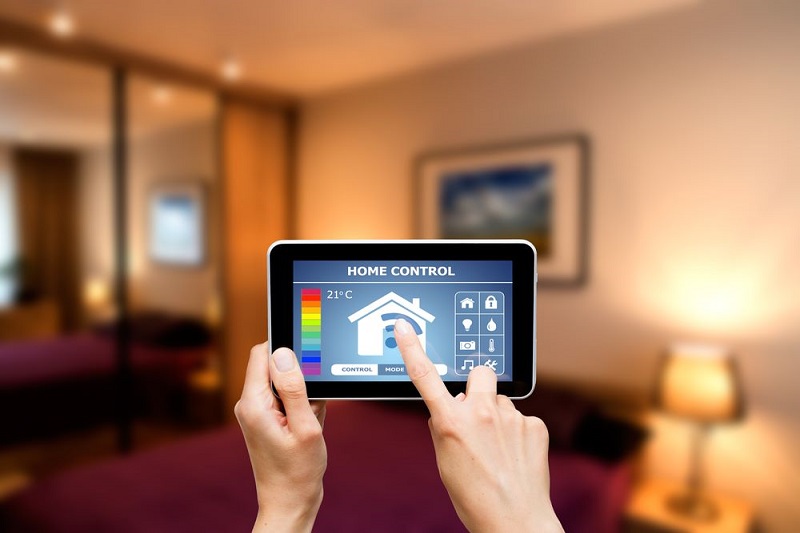
Is it high energy bills that you dread at the end of each quarter? Have you ever thought that there must be a more efficient way to light commercial spaces that you control? Wouldn’t it be nice to have automatic lights in your building that would adjust themselves according to who is actually in the room or how bright it is outside?
What really drives building managers and facility owners in Australia to look into intelligent lighting solutions is the fact that these questions could soon be reality. DALI has introduced light control technology that is likely to be revolutionary in its approach to using illumination in commercial spaces. This digital protocol allows precise control of every luminaire, not only allowing for immense energy savings but also making the environment much more comfortable for occupants.
What Is DALI? Basics Taken to Understand
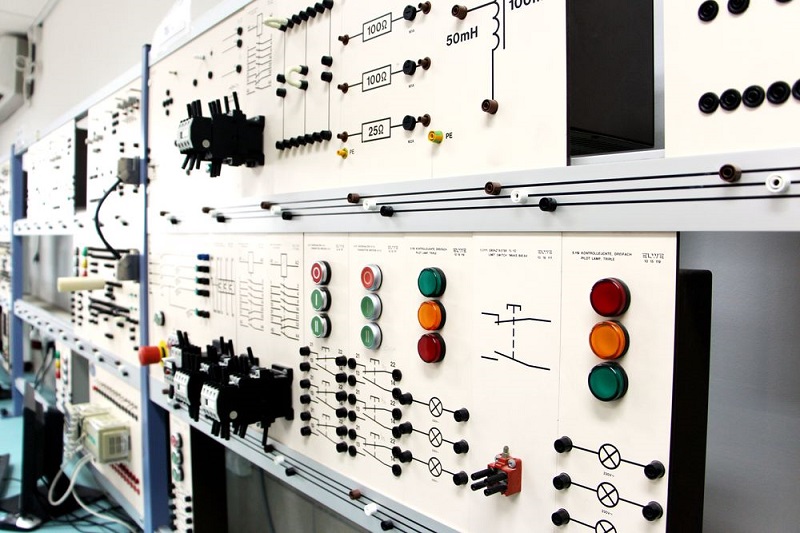
What a DALI system and how works?
What is Contained Inside DALI System Technology? Well, first of all it stands for Digital Addressable Lighting Interface, which is a standardized protocol for bidirectional communications between luminaires and a central controller. You can say that it gives each light in your building an address, just like houses on a street.
Basically, the magic happens when digital signals go through plain old two-wire cables. And each DALI driver knows when to dim, brighten, or switch off completely. But the most special aspect of it is the feedback loop—the ability to query each fixture from the controller as to its status, thus making troubleshooting and monitoring incredibility painless.
DALI Lighting Control System: Main Components
A complete DALI installation comprises several core working elements, among which are the DALI control unit, which works like the brain sending out command messages and receiving status updates; while DALI drivers are located within each fixture to decode commands and adjust output levels.
Sensors form an important part of the picture as well. Occupancy sensors will tell when the use of space is happening, and daylight sensors will measure ambient levels of light. Input devices are wall switches or touchscreen panels that allow manual activation.
All those that combine together are connected through the DALI bus-a dedicated two-wire network that carries both power for the control signals and the digital data itself.
The Difference between DALI and Standard Lighting Control Systems
Typical lighting controls provide for ON or OFF states without variations. Use the switch at full brightness before turning on. True, there already exist some very old proximity dimming systems along with a few newer products, but most have interoperability and varied reliability issues.
What is the principal advantage a DALI setup has? Individual addressability: each fixture is now controllable independently; zones may be created, and scenes programmed-all through a single control network. In fact, if done through a straightforward conventional installation, rewiring large distances would be necessary to achieve anything even close to such flexibility.
Energy Efficiency Benefits of DALI Lighting Control
Accurate Dimming and Light Level Optimization
This is where DALI really shines, so to speak. Logarithmic dimming with 256 discrete levels gives smooth transitions defined in a way the human eye perceives as natural. This perfectness means you will never use more energy than absolutely necessary.
A known example of a situation in offices would include video calls on which one may dim ambient lighting levels to possibly 40% while leaving task lighting at 100%. The DALI controls that lighting automatically to pre-set scenes, thus reducing energy consumption without anybody lifting their finger to do anything.
Daylight Harvesting: Take Employing Natural Light
Natural light can, indeed, be called abundance: Australian buildings can’t get enough of it, especially in cities like Brisbane, Sydney, and Perth. This takes artificial lighting to a minimum according to sufficient sunlight that is available by daylight harvesting and is really a free natural resource.
Photosensor laying in proximity to windows continuously sample ambient light levels. When bright conditions prevail, the DALI control system dims fixtures located nearby proportionally. As the clouds drift overhead, or the sun shifts, lighting increases correspondingly and by little increments to keep the light level constant.
Zoning and Scene Setting for Targeted Energy Use
Instead of treating the whole floor as one zone for lighting purposes, DALI allows for small areas to be defined. From the meeting room, individual workstations, and circulation zones to amenities; each can operate independently with the appropriate settings dialed in.
Zoning takes this one step further. A particular “presentation” zone may require dimming of ambient light while highlighting a speaker area. An “end of day” zone may switch off all lights except those that were salient for emergency or security.
An Overview of Energy-Saving Mechanisms with DALI Control in Commercial Buildings:
Offices and Open Space Configurations
Open-plan offices have peculiar challenges. Natural light varies dramatically across the floor plate, and occupancy is, shall we say, fluidly different at different times of the day. DALI handles this complication with aplomb.
Along perimeter areas adjacent to window zones, less output is given during daylight hours. Interior zones meanwhile remain bright. Hot-desking activates lights only over occupied workstations, leaving everything else dimmed or dark.
Applications in Retail and Hospitality
Lighting in a retail environment should create an ambiance that changes with time of the day and customer flow, and DALI does it without human intervention.
Morning trading hours might be brighter and engaged. In the evening hours, warmer, intimate interiors might be operational. Stockroom and back-of-house areas are occupancy sensed, so lights are not burning in unnecessary areas.
Industrial Lighting and Warehouse Operations
Warehouses have high ceilings and vast floor areas. By the time the lighting is considered under traditional methodologies, the light works over the whole area irrespective of the activity patterns; something heavily wasteful.
The DALI-controlled operation allows for greater discrimination in the operational opening of high-bay fixtures zone-wise. When a forklift or worker approaches an illumination queue, detection through motion would light the row. Distant aisles remaining dimmed.
Making Your DALI Technology Lighting Future-Proof
The DALI lighting control is among the most intelligent investments one can make for long-term building energy efficiency. The technology offers real savings while increasing comfort, assisting in compliance matters.
DALI keeps evolving. DALI-2 answered earlier interoperability problems while the new standards support a wider range of device types including emergency lighting, sensors etc. Thus, whatever you invest in today will not become redundant tomorrow.
If you are the manager of a commercial building in Australia and have not thought about DALI, now is the time to have a discussion with your electrical contractor. The case for taking DALI up with energy savings, maintenance benefits, and compliance goes well and strong. Your electricity bills will appreciate it, and so will the environment.
January 22, 2026
Leave a comment
552